
Migration and Lifecycle
Standards-based LTO tape migration planning with lifecycle clarity.
Tape programs succeed when teams can migrate without lock-in, preserve portability, and keep operations supportable across hardware refresh cycles.
No lock-in positioning

Standards-based by design: LTO roadmap continuity, LTFS portability, and governance-ready WORM/encryption so archives stay movable and supportable over time.

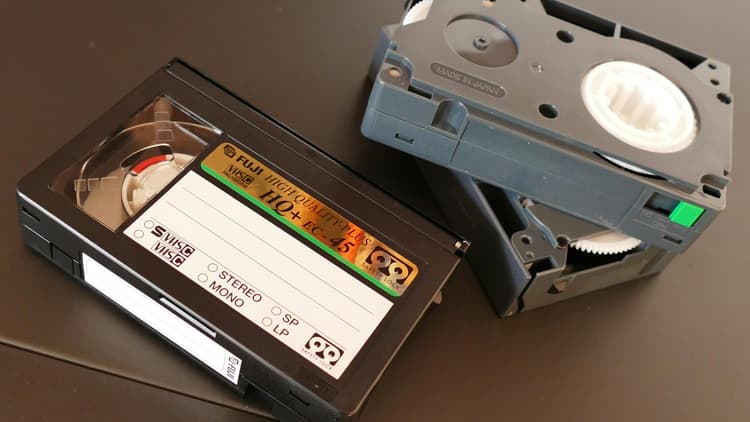
Step 1
Assess legacy estate and risk.
- Inventory media generations, format dependencies, and restore paths.
- Identify unsupported platforms and lifecycle exposure.
- Define recovery targets and retention policy constraints.

Step 2
Map to standards-based LTO architecture.
- Select target class: Q24, Q40, Q80, or Q1000+Powered by Orion.
- Plan ingest windows and drive-count profile.
- Define LTFS portability and WORM-enabled governance controls.
Step 3
Run phased migration and validation.
- Pilot representative datasets and restore test procedures.
- Cut over in waves to reduce operational disruption.
- Document governance controls and service runbooks.
Step 4
Maintain lifecycle continuity.
- Schedule firmware and compatibility reviews.
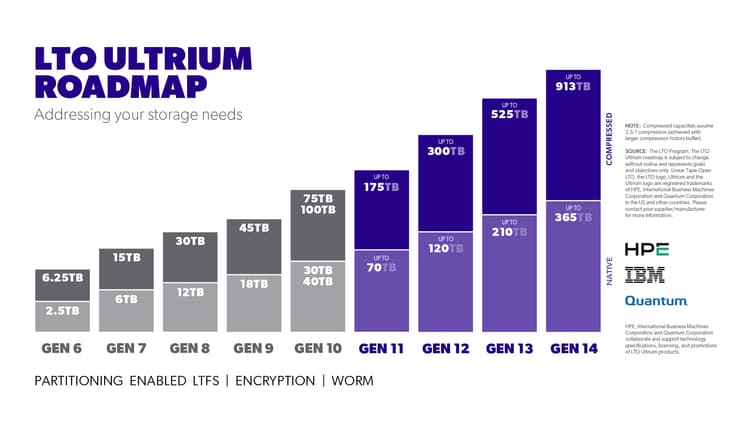
- Model future density expansions and site replication policy.
- Update disaster recovery exercises and audit evidence.
LTO roadmap graphic credit: The LTO Program.
Scale path proof
Built for growth from compact deployments to rack-scale archives.
LTO-10 media class
30/75 TB and 40/100 TB classes
Q1000+Powered by Orion density
44.6 PB native per 48U rack
Q series path
Q8 and Q24 through Q40, Q80, and Q1000+Powered by Orion
Expansion model
Start small, expand drive counts and slots as retention grows
Next action
Build a migration plan with sizing and timeline checkpoints.
Share current library estate, retention policy, and restore targets. Qualstar can help map the transition to standards-based LTO automation with phased cutover milestones.