
Evolving Economic Calculations
The global tape storage market is projected to reach nearly $14 billion by 2033, with an annual growth rate exceeding 8%. Despite longstanding skepticism regarding the viability of tape storage, this growth warrants careful analysis. The resurgence is driven by quantifiable economic factors that position tape as the most logical solution for cold and archival data in 2026.
Three converging factors have fundamentally altered the economics of data storage. First, enterprise data volumes are expanding exponentially, fueled by AI training datasets, 8K media workflows, IoT telemetry, and regulatory retention requirements, while budgets remain constrained. Second, cloud storage costs have become increasingly unpredictable due to egress fees, API transaction charges, and tiered retrieval penalties. Third, rising energy costs have rendered always-on spinning disk storage prohibitively expensive for data that is infrequently accessed.
Within this context, the economic advantages of tape storage are compelling. An LTO-9 cartridge provides 18 terabytes of native capacity for approximately $100 to $150, resulting in a raw media cost of $5 to $8 per terabyte. The introduction of LTO-10 in early 2026, offering 40 terabytes of native capacity per cartridge and up to 100 terabytes compressed, further reduces this cost. When library infrastructure is included and costs are amortized over tape's 30-year media lifespan, the total cost of ownership ranges from $7 to $15 per terabyte per year.
In comparison, cloud archive tiers cost $12 to $48 per terabyte annually before retrieval fees, while enterprise disk arrays range from $60 to $150 per terabyte per year, including power and cooling. For data requiring long-term retention but infrequent access, tape is four to eight times less expensive than disk and often half the cost of cloud archive storage over a five-year period.
The energy efficiency of tape storage is another significant consideration. A tape cartridge stored offline consumes no power. Industry studies indicate that tape-based archives can reduce energy consumption by up to 87% compared to equivalent disk-based cold storage tiers. As data centers encounter heightened scrutiny regarding power usage and as sustainability commitments become increasingly consequential for business operations, this advantage is substantial.

On-Premises, Cloud, and Hybrid Storage: Evaluating Trade-Offs
By 2026, the storage discussion has shifted from a binary choice between cloud and on-premises solutions to the development of intelligent tiered architectures that align data access patterns with the most cost-effective storage medium.
Cloud storage is well-suited for small, variable, or geographically distributed workloads where the benefits of managed infrastructure justify higher per-terabyte costs. However, as data volumes increase to hundreds of terabytes or more, the cost structure becomes less favorable. Egress charges, which are fees imposed by cloud providers for data retrieval, can range from $80 to $120 per terabyte. These costs can transform seemingly affordable archive storage into a substantial expense during disaster recovery or large-scale data migration.
On-premises disk storage offers the fastest access times and is effective for hot and warm data tiers. However, maintaining petabytes of spinning disk for archival data incurs ongoing expenses for power, cooling, and periodic hardware refresh cycles, even when the data is infrequently accessed.
The most widely adopted hybrid model integrates on-premises tape storage with S3-compatible object storage interfaces, enabling tape libraries to serve as a nearline tier accessible through standard cloud-native protocols. This approach provides organizations with the cost efficiency of tape and the accessibility of cloud storage. Data is presented as residing in an S3 bucket, while it is physically stored on cartridges that are significantly less expensive than equivalent cloud capacity.
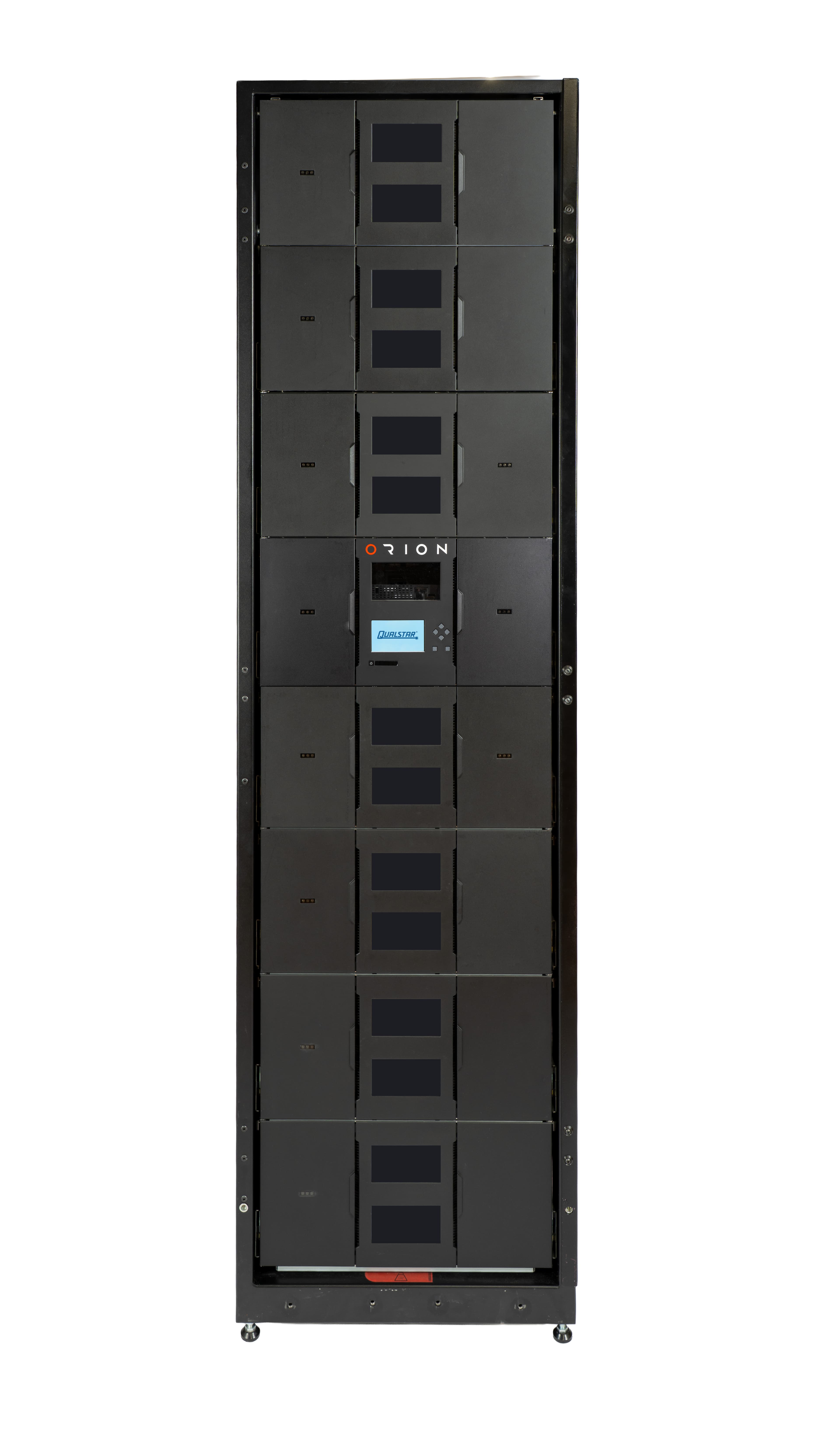
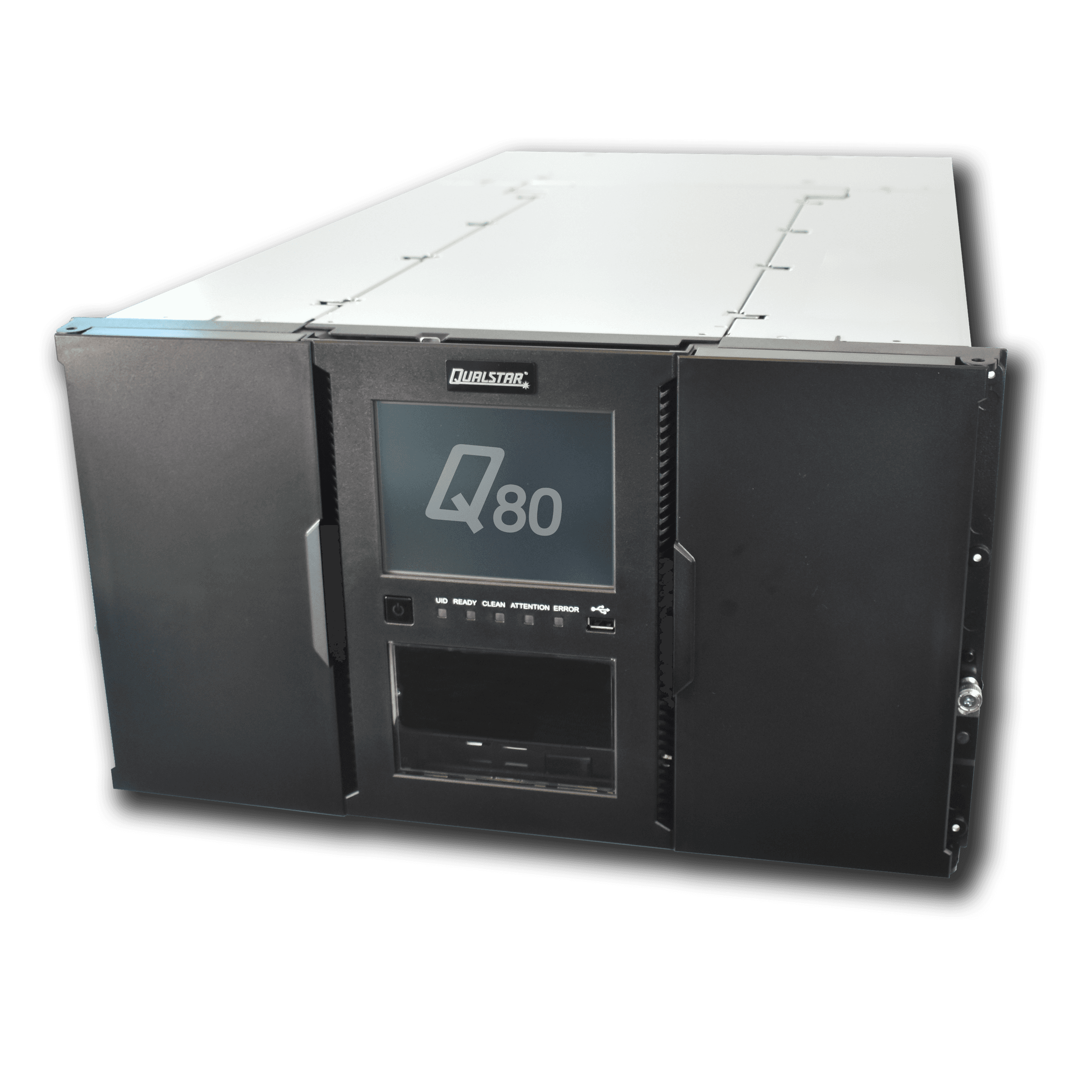
Qualstar's Q-Series libraries, which utilize open LTO standards and do not require proprietary slot licensing fees, are well-suited for these architectures. They function as standards-based targets for a range of software, appliances, or orchestration layers, including Veeam backup environments, media asset management platforms, and custom archive workflows.
Key Drivers of Market Demand
Multiple industries are contributing to the renewed adoption of tape storage, each motivated by distinct requirements.
In the media and entertainment sector, the transition to 4K and 8K production has resulted in substantial volumes of camera-original, mezzanine, and deliverable files that require long-term preservation but are infrequently accessed. A single feature film may generate hundreds of terabytes of raw footage. Studios and post-production facilities require storage solutions that scale to petabytes without proportional cost increases and that offer true offline copies, which are immune to ransomware and cloud account compromise.
In banking and financial services, regulatory retention requirements spanning years or decades make tape's longevity and low carrying costs particularly advantageous. WORM, or Write Once, Read Many, media fulfills compliance mandates for immutable records, while air-gapped tape offers a recovery layer that is inaccessible to network-based attacks.
In education and research, universities and national laboratories produce extensive datasets from genomics sequencing, climate modeling, particle physics, and AI research. These datasets represent years of irreplaceable work. Tape storage offers a preservation layer that institutions can sustain for decades at a manageable cost, independent of the long-term viability of any specific cloud vendor's pricing model.
In healthcare, medical imaging archives, including MRIs, CT scans, and pathology slides, continue to expand and must be retained for the duration of a patient's life. The requirements for long-term retention, large file sizes, and infrequent access align closely with the strengths of tape storage.

The Importance of Vendor Independence
Vendor lock-in represents a significant but often overlooked risk in storage planning. Proprietary ecosystems, slot-based licensing fees, and closed architectures create long-term dependencies that restrict flexibility and increase costs. The LTO standard was established to address this issue; drives and media from different manufacturers are interoperable, and the published roadmap now extends through LTO-14, which is projected to offer approximately 913 terabytes per cartridge.
Qualstar has structured its business model around the principle of independence. As one of the few remaining independent tape library manufacturers, with over 40 years of continuous design and manufacturing experience, Qualstar produces libraries that integrate seamlessly with existing customer infrastructure. There are no slot fees, proprietary software requirements, or restrictions on compatible backup applications, media asset managers, or archive orchestration platforms.
The Q-Series ranges from the 1U Q8 at 144 terabytes to the rack-scale Q1000+ at over 44 petabytes per rack, offering a clear expansion path to exabyte-class deployments, all utilizing open, standards-based LTO technology.

Conclusion
The resurgence of tape storage is not driven by sentiment but by the compelling economics of cold data management. For organizations requiring the storage of petabytes over extended periods, tape offers the lowest total cost, zero energy overhead, robust air-gap security, and freedom from vendor lock-in. In 2026, organizations adopting tape storage are responding to objective analysis rather than following trends.